The ACS-24 Study: Very Early Discharge after ACS in Low-Risk Patients is Safe and Effective
Background
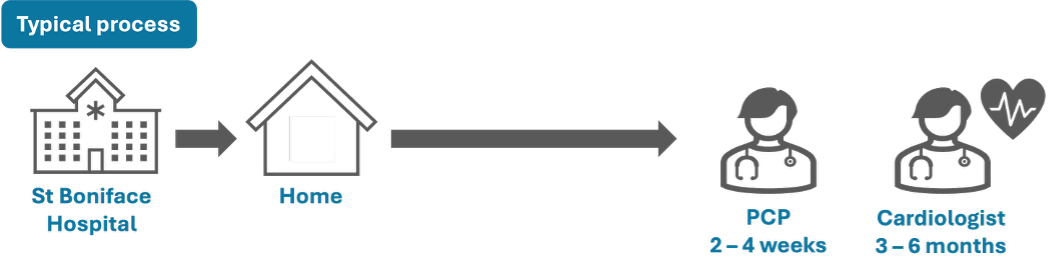
Hospital discharge after acute coronary syndrome (ACS) is a vulnerable transition period that can cause preventable patient anxiety, emergency department (ED) visits, and readmissions. These challenges are often driven by delayed outpatient follow-up and insufficient patient education. To address this, ACS-24 is a transition-of-care program that improves post-discharge outcomes for low-risk ACS patients through structured education, symptom support, and early follow-up.
Methods
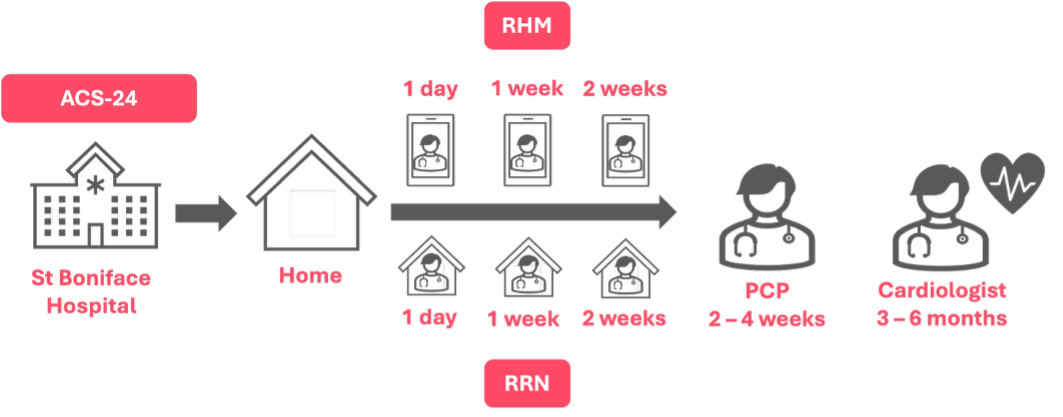
The ACS-24 study evaluates low-risk ACS patients discharged approximately 24 hours post-cardiac catheterization by comparing two post-discharge transition strategies: in-person Rapid Response Nursing (RRN) and digital Remote Home Monitoring (RHM). Eligible patients were randomized 1:1 to either arm, with both approaches delivering structured education, symptom monitoring, and scheduled healthcare provider contact during the first two weeks after discharge. RRN patients were visited by community nurses 1 day, 1 week and 2 weeks after their hospital discharge, while RHM patients were provided with scheduled phone appointments with a cardiologist. Clinical outcomes—including mortality, recurrent myocardial infarction, congestive heart failure, stroke, emergency department visits, and hospital readmissions—were subsequently evaluated at 30 days post-discharge.
Results
- 200 low-risk ACS patients were enrolled between February 2023 and January 2026
- Cardiovascular risk factors and comorbidities did not differ between the patients in the RRN and RHM groups
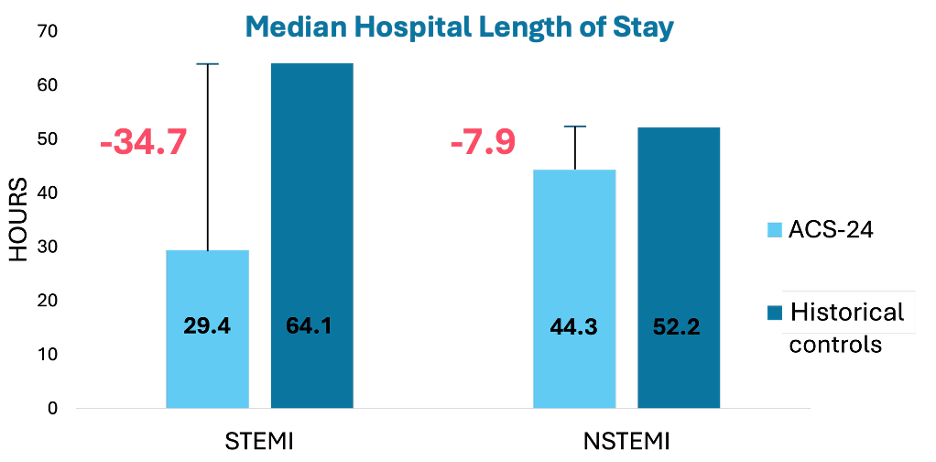
- Median hospital length of stay was reduced for both STEMI and NSTEMI patients
- Thirty-day hospital readmission rates remained low at 2.5% compared with 4% in historical controls
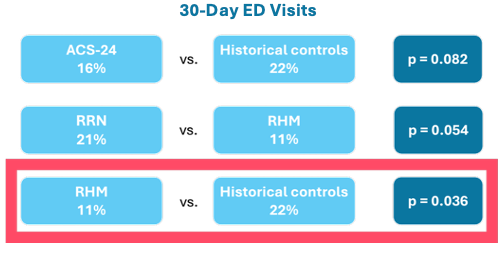
- 30-day ED visits were significantly lower in RHM patients than in historical controls
Conclusions
ACS-24 demonstrates the potential to safely reduce hospital length of stay while improving the transition from hospital to home for low-risk ACS patients. These findings support further expansion of structured post-discharge care models to improve patient outcomes and optimize healthcare resource utilization for ACS patients.